Nobody could brood like Steve McQueen at his peak. In 1968, his film company, Solar Productions, released an excessively broody cops-and-gangsters flick called Bullitt, since hailed by many as having the best car chase ever filmed. The smackdown between McQueen’s ’68 Mustang GT390 and the hitmen’s black Charger R/T 440 plays out across the roller-coaster hills of San Francisco, a high-wattage combination that enshrines the sequence as some of the best car action ever committed to celluloid. But Bullitt is no car movie—no more than The French Connection or The Seven-Ups, two contemporary crime flicks that also feature wild chases through bustling cityscapes (with Bullitt’s famed stunt coordinator Bill Hickman also driving in both).
McQueen’s mission with Bullitt wasn’t to make a car movie—he tried that a couple years later with the moody Le Mans. Rather, it was to make a film that broke cinematic conventions. The late ’60s was the beginning of the auteur era of experimental filmmaking, and McQueen wanted to join in with a hyperrealistic, almost documentarian approach to an old-fashioned noir-era detective story. Like a latter-day Sam Spade, McQueen’s Lieutenant Frank Bullitt slogs through a convoluted caper with head-scratching twists that are nearly impossible to follow. As the mafia gunsels chase their quarry with a shotgun, an ice pick, and terrible aim, the smarmy bigwigs ride Bullitt in a classic working-man-against-the-system cliché that is as old as Jason and the Argonauts.
Welcome to the Hagerty Movies and Cars Celebration, where we highlight and explore the relationship between cars and the silver screen.
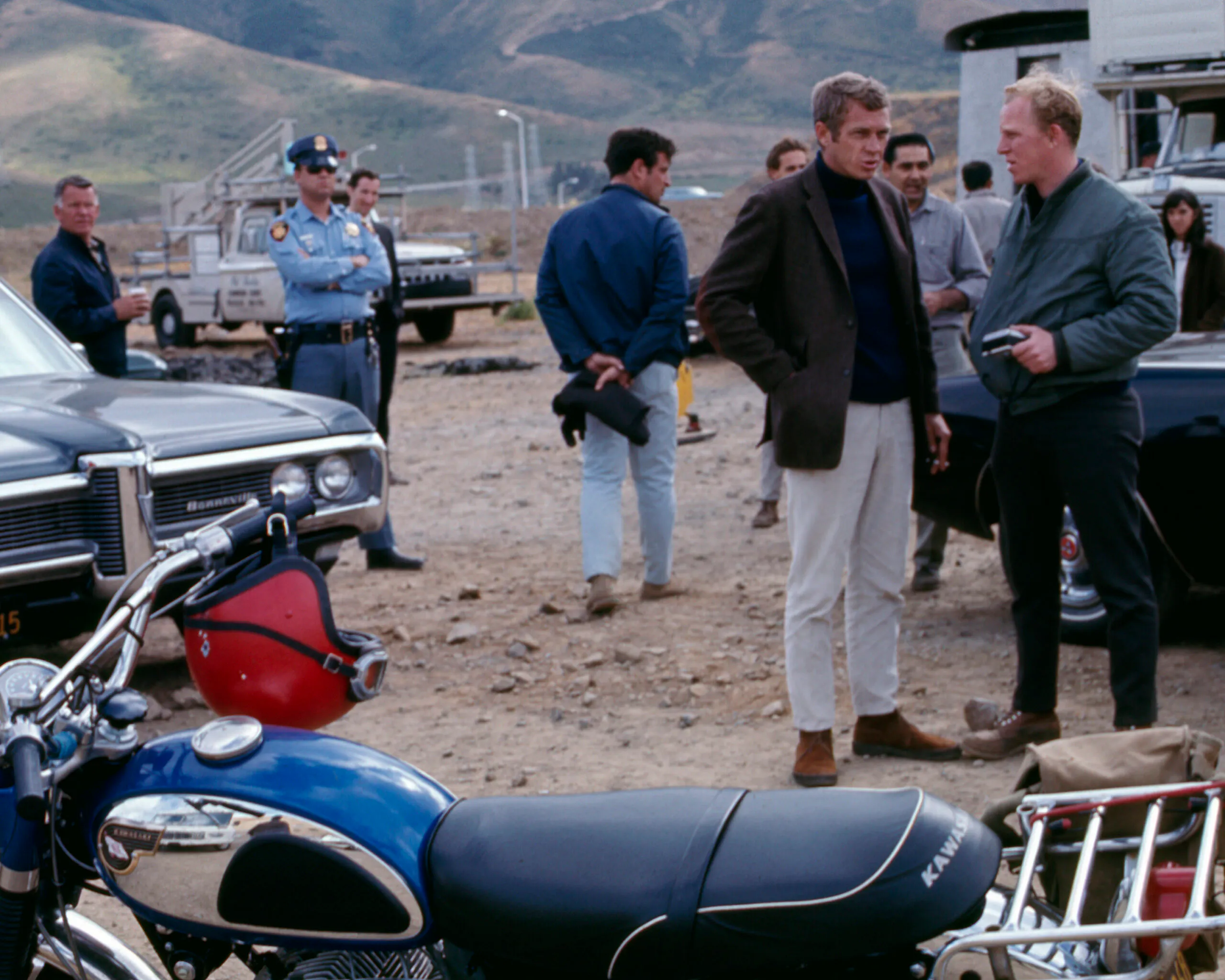
If Bullitt’s main characters are two-dimensional tropes and the story is twisted spaghetti, it’s the film’s cinema verité style along with McQueen’s ice-blue gaze and Lalo Schifrin’s jazzy score that gives Bullitt whatever lasting cultural significance it has. A hospital surgery scene, shot with real doctors and nurses who move with professional efficiency and speak in low, flat tones as they work, was novel for its day—and heavily cribbed two years later in Robert Altman’s M*A*S*H. Additionally, Bullitt is fun to watch if you want to see what real San Francisco looked like in the mid-’60s, not the Haight-Ashbury psychedelic stereotype so commonly portrayed in film and documentary.
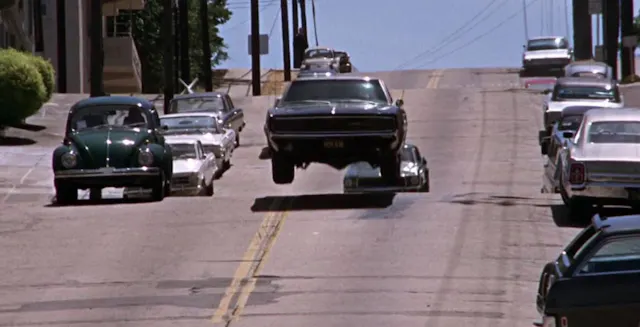
Yet, as with the nearly dialogue-free Le Mans, McQueen’s personal interests overrode his storytelling skills, the result being a pear-shaped film almost exclusively remembered for its 9 minutes and 42 seconds of car carnage in the middle. Granted, the chase is a corker, if rife with obvious gaffes—the virtually unlimited number of hubcaps that go flying, the green VW Beetle and white Firebird that keep reappearing, the film camera that gets plowed into—which lend a certain amateurish feel to the production. But filming without special effects on city streets was like that back then, and we miss its authenticity today.

The Charger is destroyed at the sequence’s fiery conclusion and the story moves on. Which is where today’s DVD audience drifts away because, frankly, who cares what happens after the chase? We love the action and the cars, but Bullitt’s cars are not characters in the way they are in other films, just a couple of exciting props that are having a brief cameo. They are not on screen long enough for us to make an emotional connection to them and we don’t mourn their exit. Which is why Bullitt is not a car movie, just a muddled cop movie with a great chase scene.
This story first appeared in the Movies and Cars digital issue of Hagerty Drivers Club magazine. Join the club to receive our award-winning magazine and enjoy insider access to automotive events, discounts, roadside assistance, and more.